Commercial Properties
Is a highway site a good fit for a restaurant near Eau Claire?
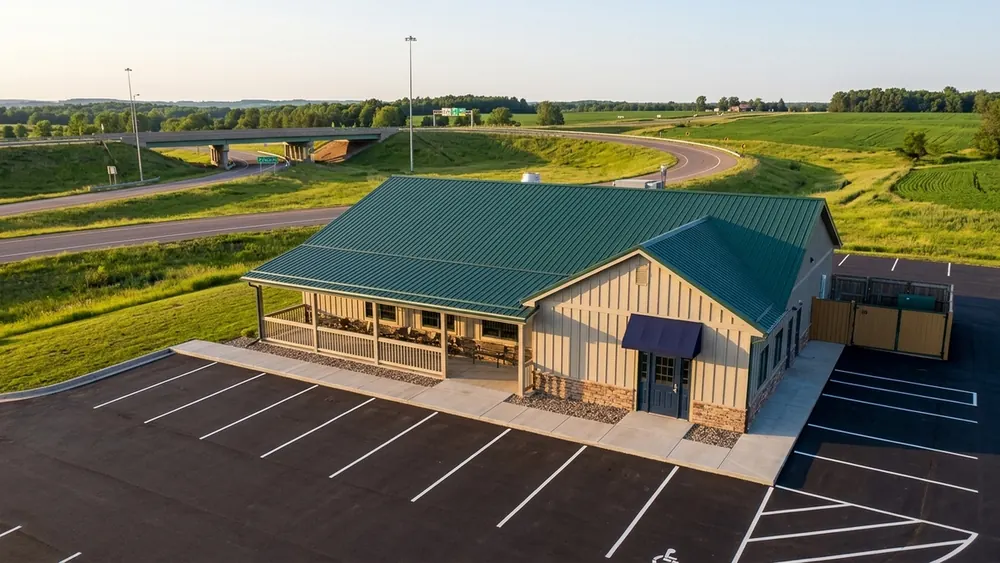
A highway site near Eau Claire can fit a restaurant that depends on travelers and interstate visibility, while a destination concept may suit an in-town location. It comes down to who your customers are, how they arrive, and what the site allows.
On this page
It depends on who your customers are
A highway site can be a good fit for a restaurant near Eau Claire when the concept depends on travelers, quick stops and interstate visibility. A site near the I-94 and State Hwy 29 interchange puts you in front of people who are already on the road. A restaurant that relies on regulars who drive in on purpose may suit a busy road inside Eau Claire. The customer decides the site, not the other way around.
So the first question is not about the building at all. Who eats at your restaurant, when do they come, and how do they find you? A traveler deciding at the last minute behaves very differently from a family planning a Friday dinner or a crew grabbing lunch between jobs. Each of those customers values different things in a location, from how quickly they can get back on the road to how close you are to their work.
Getting this right matters because a restaurant is hard to move once the kitchen is built and the equipment is in. Hoods, grease traps, walk-in coolers and seating all tie you to a location. A site that matches how your customers already travel gives the business a fair start. A site that asks them to change their habits can make even a strong concept work harder than it needs to.
What a highway location can offer
Highway sites tend to suit uses that rely on interstate visibility and easy on and off access. A traveler who sees your sign from the road, and can see how to reach you, is more likely to stop. For a quick service concept, a coffee stop, or a restaurant built around road trips and commuters, that kind of exposure can be the main reason to choose the location in the first place.
There are practical trade-offs to weigh as well. Highway sites can offer room for parking, a drive-through lane, and larger vehicles, which in-town sites sometimes cannot. On the other hand, they may depend on seasonal travel, on a single interchange, or on how well a sign can be seen from the highway. Those are questions to answer with real information about the specific site, not assumptions borrowed from somewhere else.
A recent example near Eau Claire is restaurant space marketed for lease with equipment near the I-94 and State Hwy 29 interchange in Wisconsin. It shows how a highway-access restaurant site might be presented, with the building and some equipment already in place. Treat it as an illustration of the type, not as current availability or a recommendation, because listings change and every concept has different needs.
Why some concepts belong in town instead
In-town locations along busy Eau Claire roads tend to fit restaurants that serve local customers who come back again and again. A sit-down concept, a lunch spot near offices, or a restaurant that builds a following through repeat visits may gain more from being close to where people work and run errands than from being seen by passing traffic on the interstate.
In town, the questions shift. Can customers turn in easily from the road, and back out again? Is there enough parking at your busiest hour, or do you share a lot with neighbours who are busy at the same time? Can your sign be seen from both directions? A busy road only helps if people can actually reach your door without frustration, especially during the lunch rush.
No type of site wins for every concept. A highway location can be the right location for one concept and the wrong one for another, and the same is true in town. The useful exercise is to describe your customers clearly, then hold each site against that description. When a site and a concept match, the location works with the business instead of against it.
Site details to check before you commit
Once you know which kind of location fits, the site itself needs a close look. A builder’s eye helps here, because the details that matter most for a restaurant are often physical ones that a listing does not mention. Walk the property, look at the building, and ask direct questions about each of these points before you get attached to a location.
- How cars enter and leave the site, and whether turns are clear and simple
- Where a sign could go, and whether it can be seen from the road
- Whether parking and any drive-through lane can handle your busiest hours
- What kitchen equipment, hood, grease trap and utilities are already in place
Ask about utilities with care. Restaurants often need more gas, water, sewer capacity and electrical service than other businesses, and upgrading them can be costly. If equipment comes with the space, find out its age, its condition, and who owns and maintains it. A qualified building inspector or equipment contractor can tell you what you are really taking on before you sign anything.
Who to ask about each question
Several questions about a restaurant site belong with someone other than the broker, and knowing who to ask keeps you from relying on guesses. Guy can help you compare sites and read the building on the real estate side. The table below sorts the other common questions by who can answer them, so you can go to the right source for each one.
| Question | Why it matters | Who to ask |
|---|---|---|
| Is a restaurant allowed on this site | Permitted uses vary by location | The city, town or county |
| Where did this traffic count come from | Counts vary by source, date and method | The source of the count |
| What does the lease require of me | Lease terms decide who pays for what | A Wisconsin attorney |
| Does the equipment and building work | Repairs can change your real cost | An inspector or equipment contractor |
| How will this location affect my budget | Occupancy cost has to fit the business | Your accountant and your lender |
When someone quotes a traffic count, ask for the source and the date, and confirm it yourself rather than taking it on trust. Counts can be measured in different ways and can change over time. The same goes for zoning and permitted uses, which the city, town or county confirms. Keep each answer in writing so you can compare sites on facts rather than impressions.
How the deal structure changes the decision
A restaurant site can be leased, bought, or sometimes bought together with an existing business. Each path changes what you commit to. A lease may lower the upfront cost but ties you to terms about renewal, repairs and the use of the space. Buying gives you control of the property but means a larger investment and more responsibility for the building itself.
If equipment comes with the space, look closely at how it is treated in the deal. Is it included in the rent, sold separately, or left behind by a previous tenant? Who repairs it, and who replaces it if it fails? Those answers belong in writing. A lender and an attorney should weigh in before you agree to a structure, because each one carries financial and legal consequences you will live with for years.
Your next step toward a restaurant site
Before you start looking at sites, write down a clear picture of your restaurant. A short list of facts about the concept, the customers and the kitchen will make every site visit more useful. These are the details worth putting on paper before a first conversation, even if some of them are still rough estimates or open questions.
- Who your customers are, when they visit, and how they usually arrive
- Your kitchen equipment, hood and utility needs for the menu you plan
- Parking, seating and drive-through needs at your busiest time of day
- Whether you prefer to lease, buy, or take over an existing restaurant
If you are weighing a highway site against an in-town location around Eau Claire, bring that picture to Guy and talk it through. Together you can look at the site, the building and the way the deal could be structured, and decide which questions to take to the city, an attorney, or a lender. Tell Guy what the business needs, and start from there.
This article is general information about commercial property and land in Eau Claire and Wisconsin. It is not legal, tax, lending, investment, valuation or inspection advice and does not predict prices, rents or returns. Confirm zoning and permitted uses with the city, town or county, leases and contracts with an attorney, financing with a lender, taxes and valuation with an accountant, and building condition with a qualified inspector. Guy Rossato, Guy Rossato Real Estate LLC.

Written by